

About Us
OUR STORY
We have been chartered with taking the responsibility of making sure that Hudson Lake remains the vision of beauty that it is today as a place for family and friends to enjoy nature, the serenity of life on the water, and the opportunity it has afforded for providing hours of recreation now and into the future.
OUR MISSION
We achieve this by engaging community stakeholders to join us and participate in conservation-oriented activities, including educational and research projects. We also conduct fund-raising efforts that enable the organization to bid for state and federal grants, which support the control of invasive species, useful lake level/quantity, and waterway access.
OUR VISION
As stewards of Hudson Lake, our vision is an enduring organization that promotes a healthy, thriving, and abundant, all-season, all-sport lake, capable of creating life-long memories serving individuals and families across generations.
We are a passionate group of professionals, neighbors, and local business owners who have taken on the commitment of this effort so that we can help to organize the processes involved in protecting the true nature of what Hudson Lake represents. In today's day and age, it is not enough to just enjoy the lake. There has to be a body of dedicated individuals that want to give their time and effort to create a functional protectorate that secures the betterment of the lake and all it has to offer now and into the future!
All activities are sanctioned and permitted by appropriate legal entities. All officers are unpaid and volunteer work is provided pro bono.
OUR LEADERSHIP — Serving the Cause!
-
Kevin Smith
President
-
JIM DONDLINGER
Vice President
-
GEORGETTE JOYCE
Treasurer
-
Austin Kosinski
Board Member-at-Large
LAKE HISTORY
-
The Great Lakes and the sister and brother lakes surrounding them were created. As the glaciers receded and carved out areas of the Northern North American continent, they left behind smaller areas of intense beauty, water, and wildlife that include Hudson Lake. These bodies of water have seen the worst of times and the best of times in our postmodern era. It is our passion to work to preserve and enhance the beauty that is Hudson Lake well into the next Millennia!
-
Though we do not know what the native Indians of the areas called Hudson Lake, sources have noted that in 1830 the town of Hudson was part of Deschemin Township. At that time, Hudson Lake was called Lac Du Chemin, which means "Lake of the road."
-
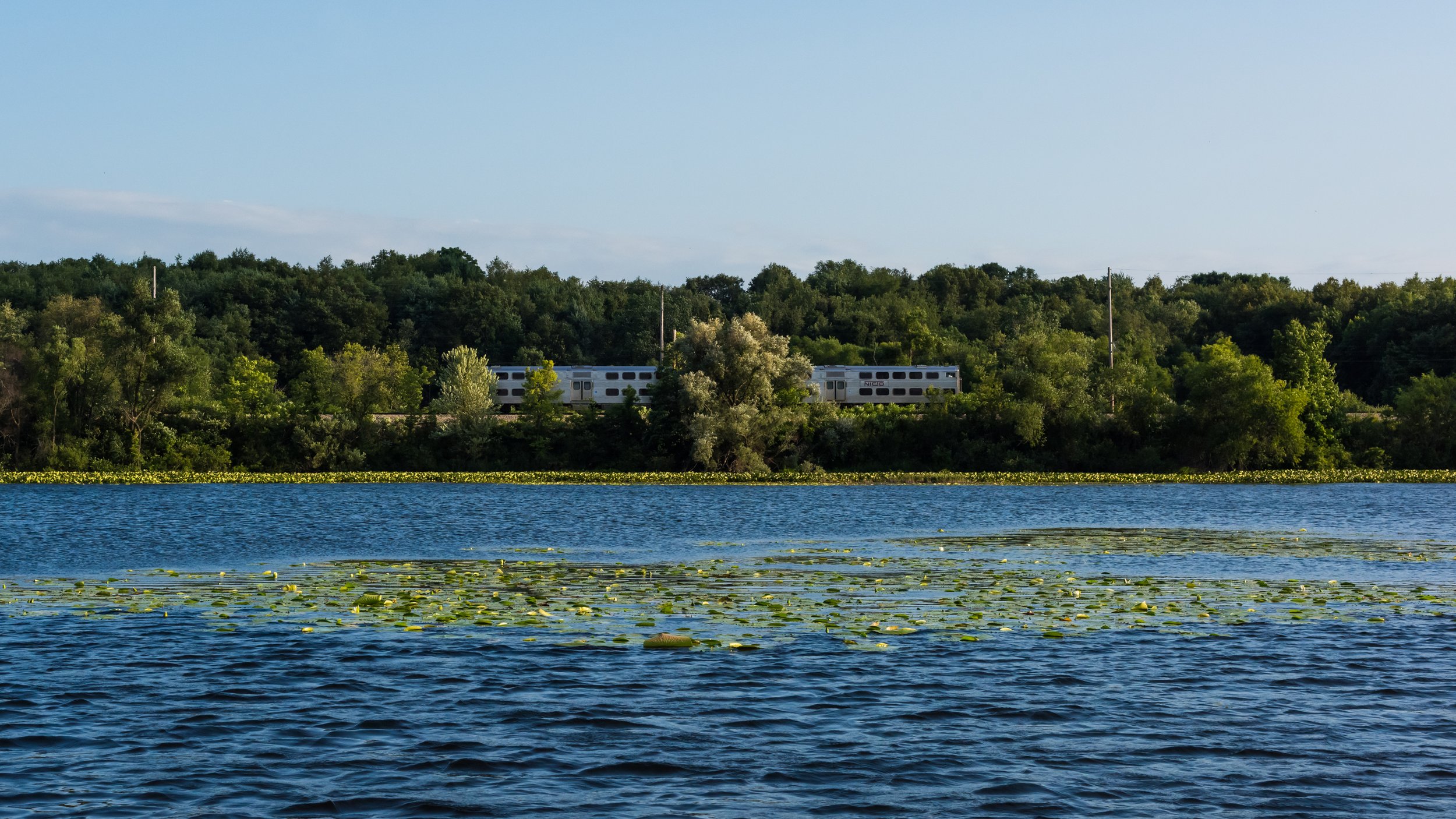
The Blue Lantern was the name of the banquet hall on Hudson Lake circa 1926. Prior to that it was known as the Casino. Across the street was the Hudson Hotel. Folks came from all over via the South Shore Train that ran from Chicago and ultimately extended to South Bend. A historical fiction book titled “Hudson Lake” by Laura Mazzuca Toops shares a story of the jazz era centering around the famous Bix Beiderbecke. Bix didn’t read music like the other musicians, but he could lose himself in the notes like no other.
-
The lake suffered severe flooding that had been unprecedented for the area. Some people’s houses were only accessible by boat. Good, bad, right, or wrong, it was determined that a drain be placed on the east end of Hudson Lake to be able to deal with any future flooding. The drain was built. Its weir was set close to the lake’s legal average level. In early 1992, the Indiana DNR and La Porte Drainage Board struck up an agreement for managing the drain operations.
-
The lake suffered a severe drought. The drain may or may not have added to the dilemma. 40% of the lake’s surface area was lost. Lake usage plummeted, muck turned into land where bushes started to grow, invasive plants prevailed, and even a waterway between the uninhabited island and land clogged up with bullrush and has yet to recover. Community members joined arms with the Indiana DNR to help the lake recover. The Hudson Lake Conservation Association was born. In 2008 a grant to do a lake diagnostic study was awarded and the association was well on its way to seeking ways to promote the health and wellness of the lake.
-
The lake recovered and started to thrive again. The invasive species in the water that took hold were being dealt with annually through LARE grants. These included Eurasian Watermilfoil (EWM) and Starry Stonewort (SSW). Untreated, these plants can strangle a lake. These treatments are done to certain areas identified prior to treatment. The treatment is injected into the water of those areas.
-
In May the Indiana DNR received approval to construct a boat launch and parking area in the northwest corner of the lake – on little Hudson. The new Hudson Lake access was made possible by a one-acre donation from a nearby landowner who wanted it designated for public use.
Construction costs were estimated at $40,000, 75 percent of which came from the Federal Aid in Sport Fish Restoration Act and 25 percent from sportsmen license money. Sportsmen contribute to the federal money through excise taxes paid when purchasing fishing equipment and fuel.
Besides the ramp, the DNR also created a 375-foot-long, 10-foot-wide access road leading to the parking area from Emery Road. Construction had to begin after July 1 to avoid disturbing potential shoreline spawning areas. It was estimated to take about two weeks to complete.
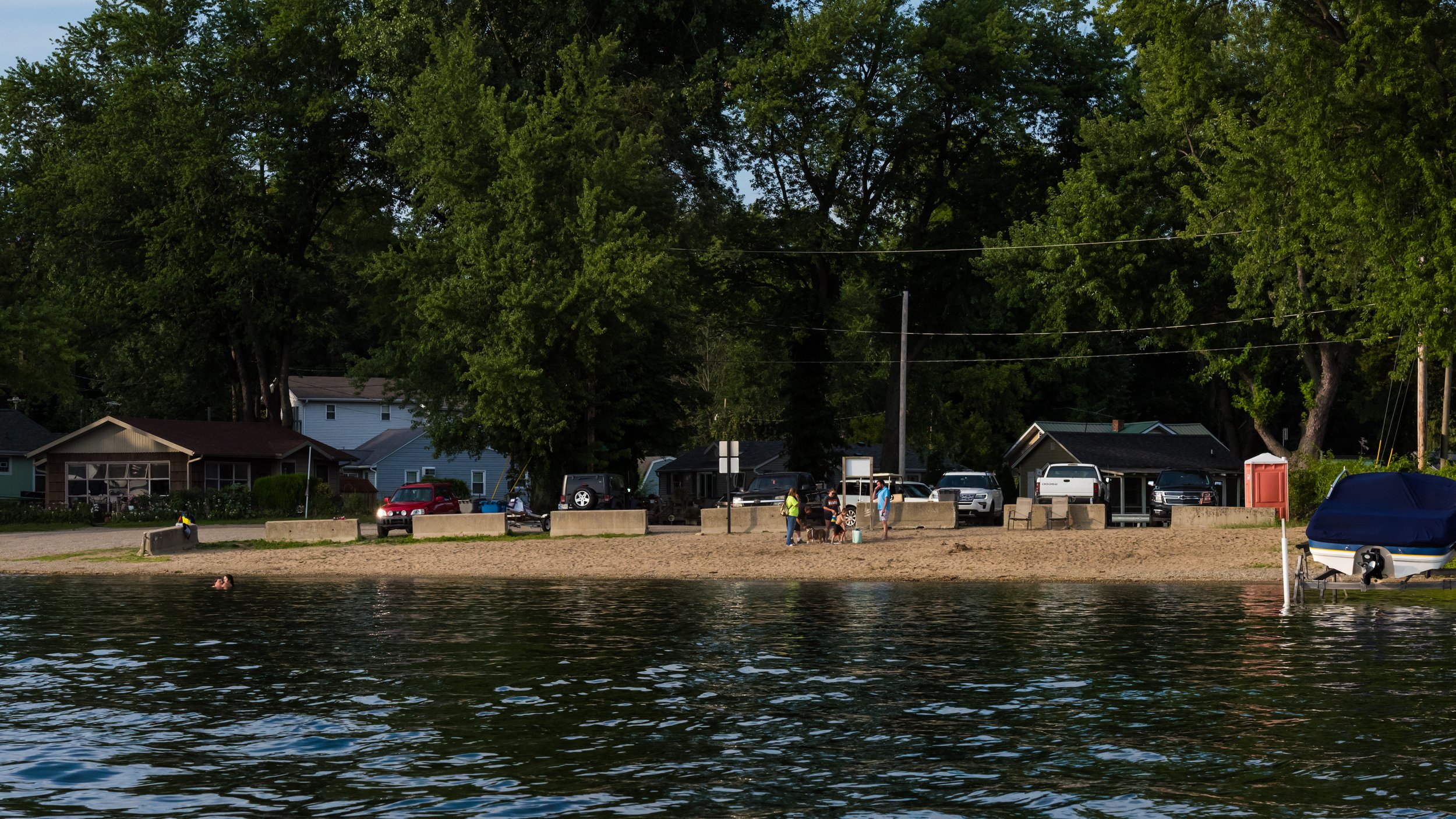
By August, 2019, the new boat launch was open. - a steep concrete ramp into the water and a pier next to the ramp, parking, along with one disabled parking spot and a porta potty.
-
Over these 2 years, the relationships between the LaPorte Drainage Board, the Indiana DNR, the Hudson Lake Conservation Association and the community deepened. Understanding of the competing needs around the lake was recognized and the focus was on better communications, learning more about how we got here, how the lake and its lakefronts have changed.
-
On May 4, 2023, the DNR shared a deep dive into Hudson Lake’s formation, history, and challenges. Due to our lake’s youth, its landscape has not had time to develop rivers and tributaries to flow in and out. Hudson Lake gets its water from precipitation, run-off, and groundwater. Water making its way into our lake can come from places where it can take over 2 years for a drop of water to make it to Hudson Lake. Our lake sits on a continental divide. Our lake water flows to Lake Michigan from the western side and flows to the Kankakee River from the eastern side. Hudson Lake has a bottom that can be sand, clay and/or muck. This creates an environment that can lose water differently than other lakes. We share water tables with a wide area. Ebbs and flows of water impacting lake water levels is quite complex. Pictures of wells that add to our story were shared. There is much more to learn about our lake and all its properties.
-
The Hudson Lake Conservation Association broadened its commitment to managing water levels in Hudson Lake. Equipment was purchased to monitor lake levels 24x7. ToltHawk was purchased with community donations. The LaPorte surveyor aided in its installation and calibration. The device sends alerts for high water levels, and summary data is loaded to our website each month. HLCA deepened its alliance with the Indiana DNR and ultimately signed a Hudson Lake drain management agreement effective April 1, 2025. This allows the Hudson Lake community to manage the water levels. A local team can service and operate the gate more consistently and quickly, thereby helping maintain the lake's water levels to support its health and usability. The drainage system flows into the Taylor ditch, which was cleaned and regraded thanks to HLCA efforts with the drainage boards in LaPorte and ST Joseph counties.
The lake’s water depths are impacted by decades of muck that can be several feet deep. This deep muck has been challenging during droughts and low lake levels. Navigation channels disappear or become traversable by only shallow crafts. Focused dredging was sought to mitigate unhealthy levels of muck that inhibit navigation, raise the lakebed to expose it to invasive species, and reduce methane levels. A sediment removal plan was completed in late 2021. Over the next few years, HLCA sought LARE grant funding to address two identified dredging areas. In the fall of 2024, a dredging project kicked off to improve the navigation lanes for the public ramp and the southern channel, which is one of 2 tributaries that connect the east and west basins of the lake. The sediment removal was completed in late 2025. Subsequent sediment removal efforts are in the planning stages.
Treating invasive species is a yearly project determined by annual vegetation plans funded by LARE grants. Hudson Lake has two invasive species that require ongoing attention. They are Eurasian Watermilfoil (EWM) and Starry Stonewort (SSW). Both invasive plants disrupt local ecosystems by outcompeting native species and altering habitats. Both can choke a lake if not treated. Additionally, in 2025, HLCA treated Phragmites, a native plant that had grown to unhealthy levels, completely clogging navigation areas. One of these areas was the channel between the shore and the west island, hosting our family of eagles.
All these added efforts require additional funding and donations to secure grants that require a percentage of HLCA matched financing. Some residents stepped up with generous donations. HLCA converted its IRS status from 501(c)4 to 501(c)3 to make it easier for us to reach out to businesses for support. HLCA partnered with Amazon Web Services to secure generous grants in 2025 to supplement our dues/donations. More businesses will be pursued.

Help us in our efforts
It’s impossible for our staff to be everywhere all the time, so we rely heavily on your ability to send us information to effect change in all areas around the lake. If there is an issue you have noticed that you feel we need to address, please feel free to use this form to let us know what the incident was, when and where it happened, and who or what was involved. We will contact you to discuss the matter further as soon as possible. Thank You for your assistance.
Status updates related to Lakeshore Drive, public ramp, drain, ditch and other sites are also entered here.
This is the official source of lake incidents for HLCA to be shared with the DNR and La Porte County Drainage Board. This data is considered private for official use only. Submissions are confidential - contact information is collected for verification, follow-up, and legitimacy purposes. Data will be compiled and shared at a summary level with appropriate entities. Data will enable a better understanding of Hudson Lake’s usage and challenges.










Follow our journey ON INSTAGRAM.
@stewardsofhudsonlake


